Agence Nationale pour la Promotion et la Rationalisation de l'Utilisation de l'Energie

Agence Nationale pour la Promotion et la Rationalisation de l'Utilisation de l'Energie
Algeria building sector accounts for almost 47% of final energy consumption, making it one of the country main energy consumers. Forecasts for the growth of the building stock and the expansion of the tertiary and residential sectors promise a considerable increase in this energy consumption. This situation underlines the importance of integrating energy efficiency measures to limit environmental and economic impact.
What more, Algeria diverse climate makes it particularly vulnerable to the effects of climate change. Summers are getting hotter and winters harsher, intensifying energy demand for heating and cooling buildings. Efficient thermal insulation of buildings is therefore becoming a priority not only to improve residents’ comfort, but also to reduce energy consumption and, consequently, energycosts.
Faced with these challenges, the program for the building sector has been designed to gradually integrate energy efficiency solutions. This program aims to meet the dual requirements of thermal comfort and reduced energy consumption in a context of sustainable economic and environmental growth.
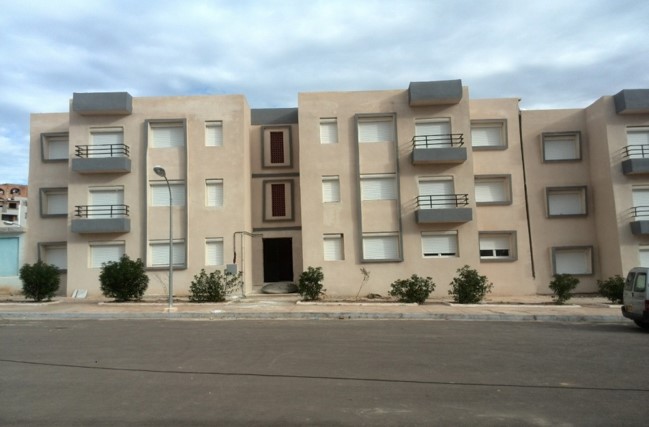
The EE-Building program for energy-efficient buildings has a number of strategic objectives
designed to promote efficient energy management in buildings. Its main objectives are:
Each year, projects are defined based on the national construction program and the availability of materials on the market. The ultimate goal is to systematically integrate energy efficiency into all new construction and expand the thermal renovation of existing buildings.
Here are some examples of projects included in the program:
The aim of this pilot project is to improve the energy efficiency of roofs on existing buildings in the tertiary/administration sector through the application of a heat-reflective coating, and to reduce energy consumption by limiting the use of air conditioning.
Aimed at tertiary sector institutions, the program provides financial assistance (non-repayable) for the application of the coating.
Aid is conditional and calculated on the basis of the operation cost
The aim of the project is to improve thermal comfort and reduce energy consumption in homes and commercial premises due to ai conditioning, through the promotion of efficient room air conditioners.
Aimed at individuals (households) and tertiary-sector businesses (small tertiary-sector businesses), the project provides financial assistance (non-repayable) of 50,000.00 DZD for the replacement of an energy-guzzling air conditioner with an efficient one.
The project aims to promote gas air-conditioning as an alternative to electric air-conditioning in order to reduce energy consumption in commercial buildings.
Designed for tertiary or administrative activities (minimum building area 500m2). The project consists of granting financial assistance (non-repayable) for the supply and installation of gas heat pump systems.
Aid is conditional and calculated on the basis of the operation cost.
The project aims to deploy individual solar water heaters and promote self-consumption of renewable thermal energy for domestic hot water production.
Aimed at individuals (households), tertiary (small tertiary) and local authorities, the project consists in granting financial assistance (non-repayable) of 65,000.00 DZD for the installation of solar water heaters.
The project aims to promote energy management systems in order to assess the potential for energy savings and optimize energy consumption.
Aimed at hotel establishments, it provides non-repayable financial assistance for the installation of the system.
Aid is conditional and calculated on the basis of the operation's cost.
The program is aimed at all types of construction: individual and collective housing, administrative buildings, schools, mosques, and many others. It aims to improve the energy performance of the entire national housing stock, by adapting to the specific climatic and architectural features of each region.